Cultural history
Mykonos, 1973: the promise and limits of a gay travel account
A text published in Vector in March 1973 opens a window onto one visitor’s Mykonos. Read alongside contemporary research, tourism promotion and a later holiday advertisement, it also reveals the limits of that view.
A rock near an unnamed nude beach; a man emerging from the water with sea urchins. Richard Piro places this encounter on Mykonos. His account, published in March 1973, recalls a later meeting in Athens marked by discretion. The dates of the visits are unknown.
The contrast invites a question more precise than when Mykonos became a gay destination. What could a visitor imagine possible there, and how much of the island could that expectation allow him to see? A remembered encounter offers an entry into the question. It cannot settle it for everyone who lived, worked or travelled there.
THE DOCUMENT
A publication date, not a travel date
Piro’s “A Gay American in Greece: What to Expect” appeared on pages 6 and 8 of Vector, volume 9, number 3, published by San Francisco’s Society for Individual Rights. The March 1973 issue introduces him among its writers. This is travel writing addressed to gay readers, not a survey of island residents.
The distinction matters before the first historical conclusion is drawn. A magazine date tells us when a representation reached print. It does not date every experience behind it. Calling this a summer of 1973 encounter would turn a retrospective narrative into a report from a season that had not yet arrived.
There are two different objects of inquiry here: the encounter as remembered by its narrator, and the published text through which other people could picture the island. We have direct evidence of the second. The first remains his testimony. Neither distinction diminishes the document’s interest; it defines the questions it can answer.
OFFICIAL TOURISM · 1967
The island was already being presented to visitors
In October 1967, the Greek National Tourist Organisation’s brochure The Aegean Islands promoted Mykonos through beaches, accommodation in homes and hotels, artists and summer nightlife. It named Ornos and Agios Stephanos among its beaches and described bars and entertainment venues. These were elements of an official visitor-facing portrait before Piro’s article appeared.
This changes how the travel account should be framed. The visitor’s sense of discovery must not be mistaken for the discovery of an untouched place. A destination could already be legible through rooms, beaches and evenings out, while acquiring different meanings for different readers. The comparison establishes that coexistence in print; it does not establish a shared political or social welcome.
Nor can the brochure supply the missing name of Piro’s beach. Matching an unnamed scene to a familiar place today would make the story easier to illustrate, but less reliable. Geography needs evidence of its own. The encounter should remain where the account leaves it: on Mykonos, without a more precise location.
FIELDWORK · 1972
Behind a visitor’s room
Margaret A. Stott’s Economic transition and the family in Mykonos offers another scale of observation. Published in 1973, it draws on fieldwork conducted in 1972. She describes families renting rooms and one household moving into a rooftop shelter to let its home. She also examines women’s cash earnings from accommodation and textile work.
The room is the point at which the two perspectives can be brought together without pretending they describe the same people. For a traveller, it makes a stay possible. For a household, offering it can reorganise domestic space and work. An account of leisure becomes more complete when the reader asks who makes that leisure possible.
Stott studies family and economic change. Her work does not verify Piro’s encounters or demonstrate acceptance of same-sex relationships. Its contribution here is more specific: it prevents the island from becoming merely the setting for a visitor’s freedom. The setting was also a place of livelihood.
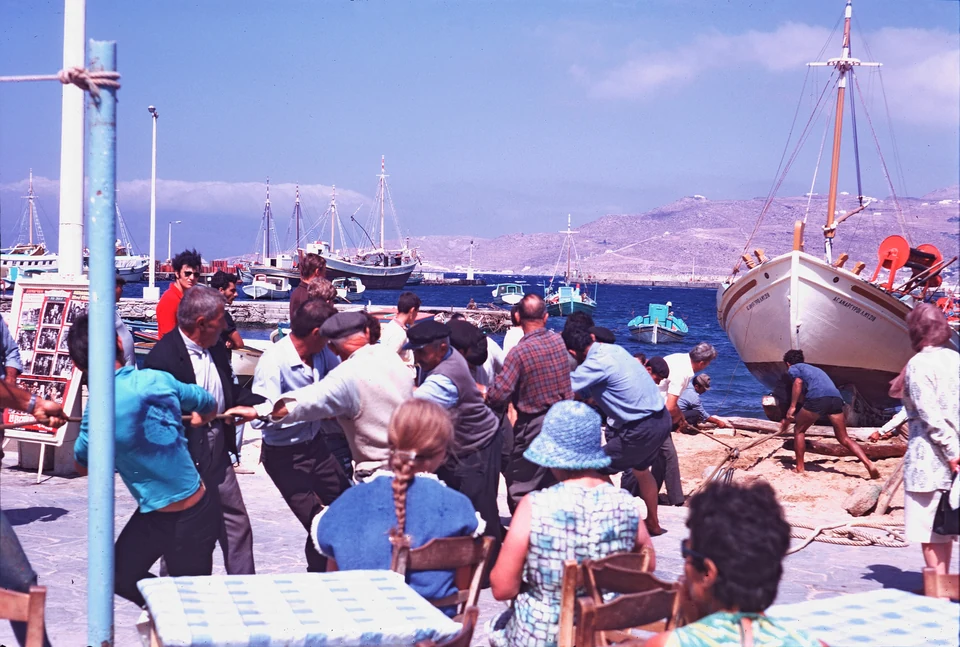
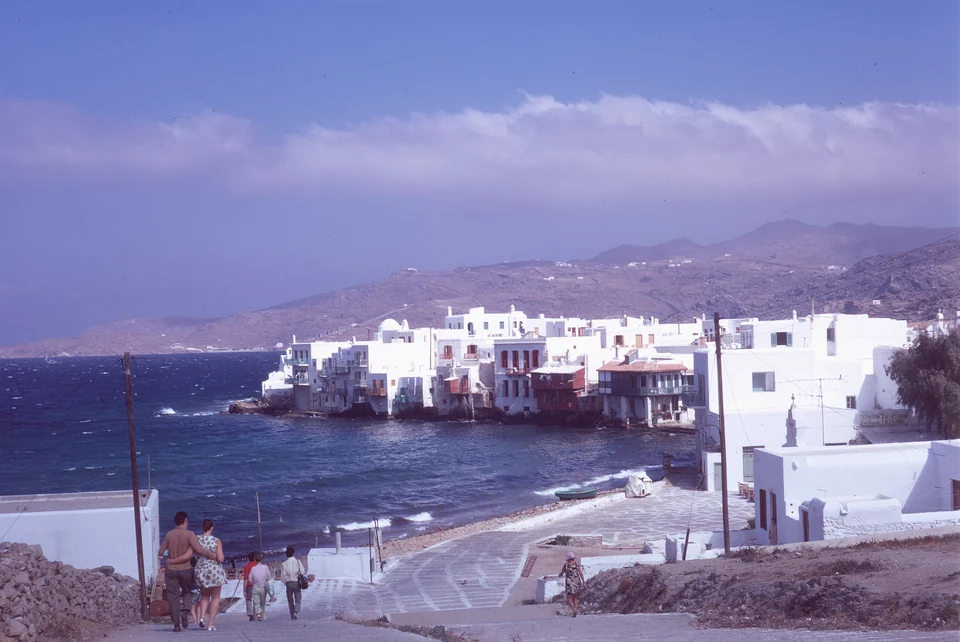
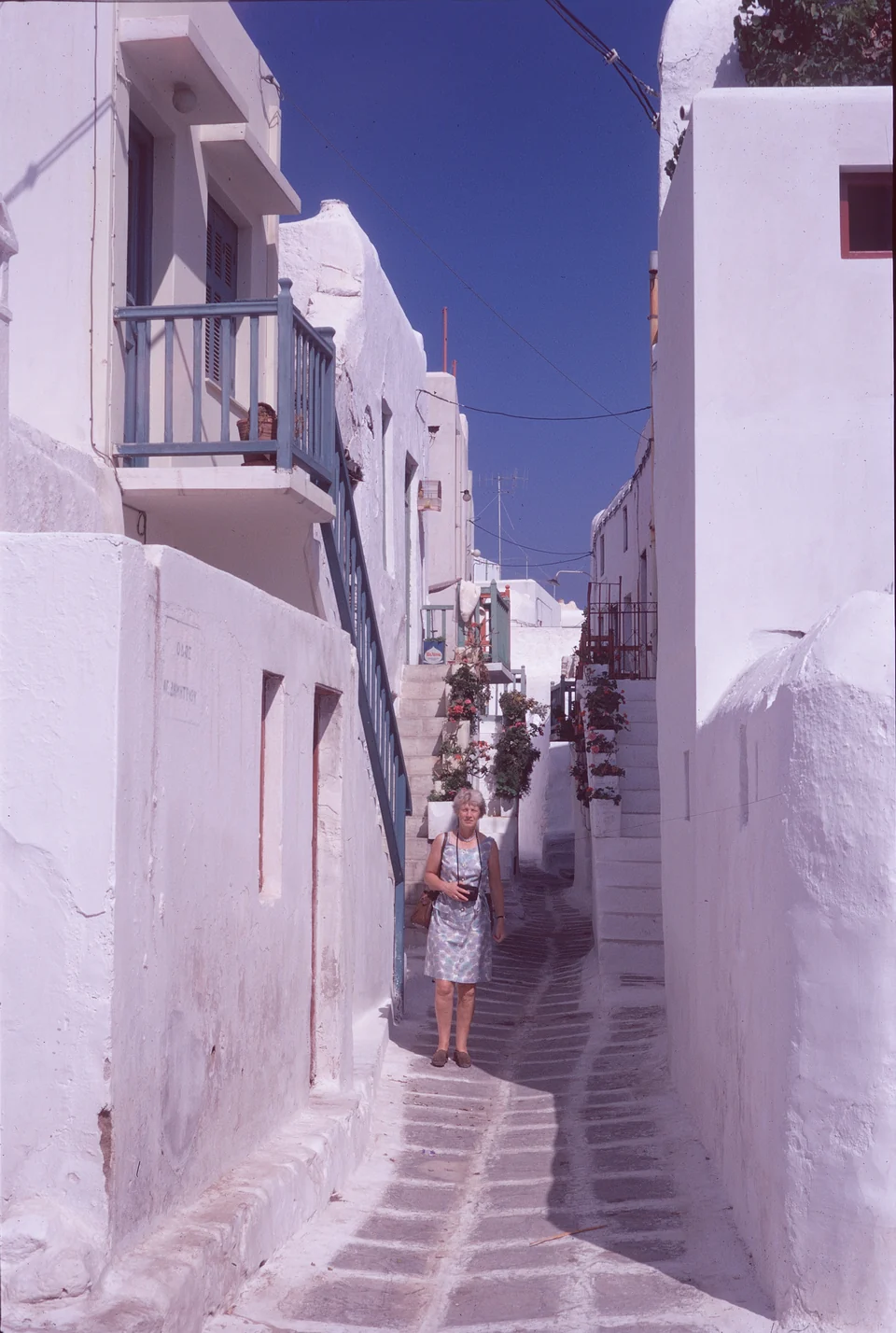
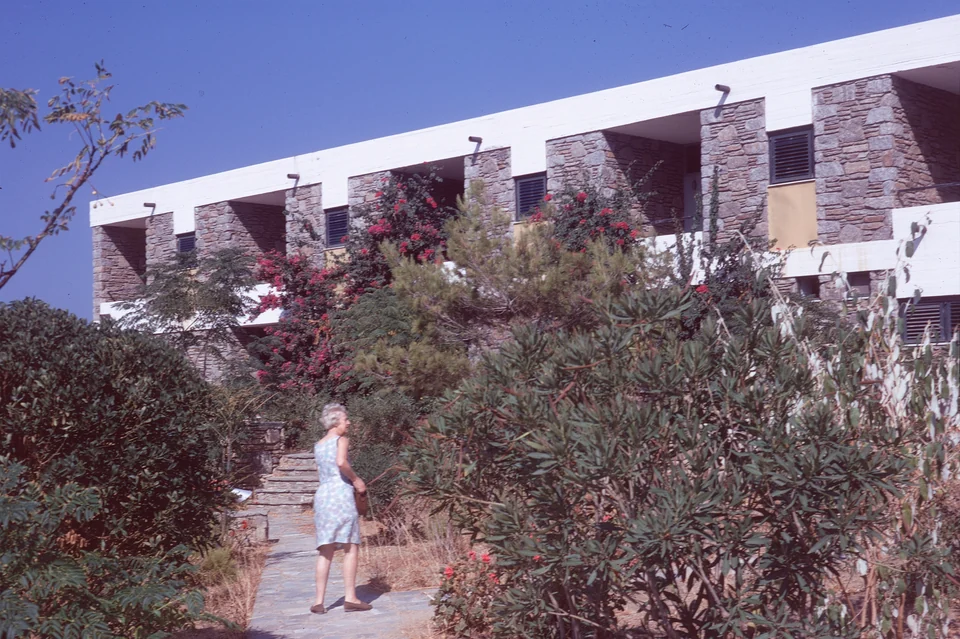
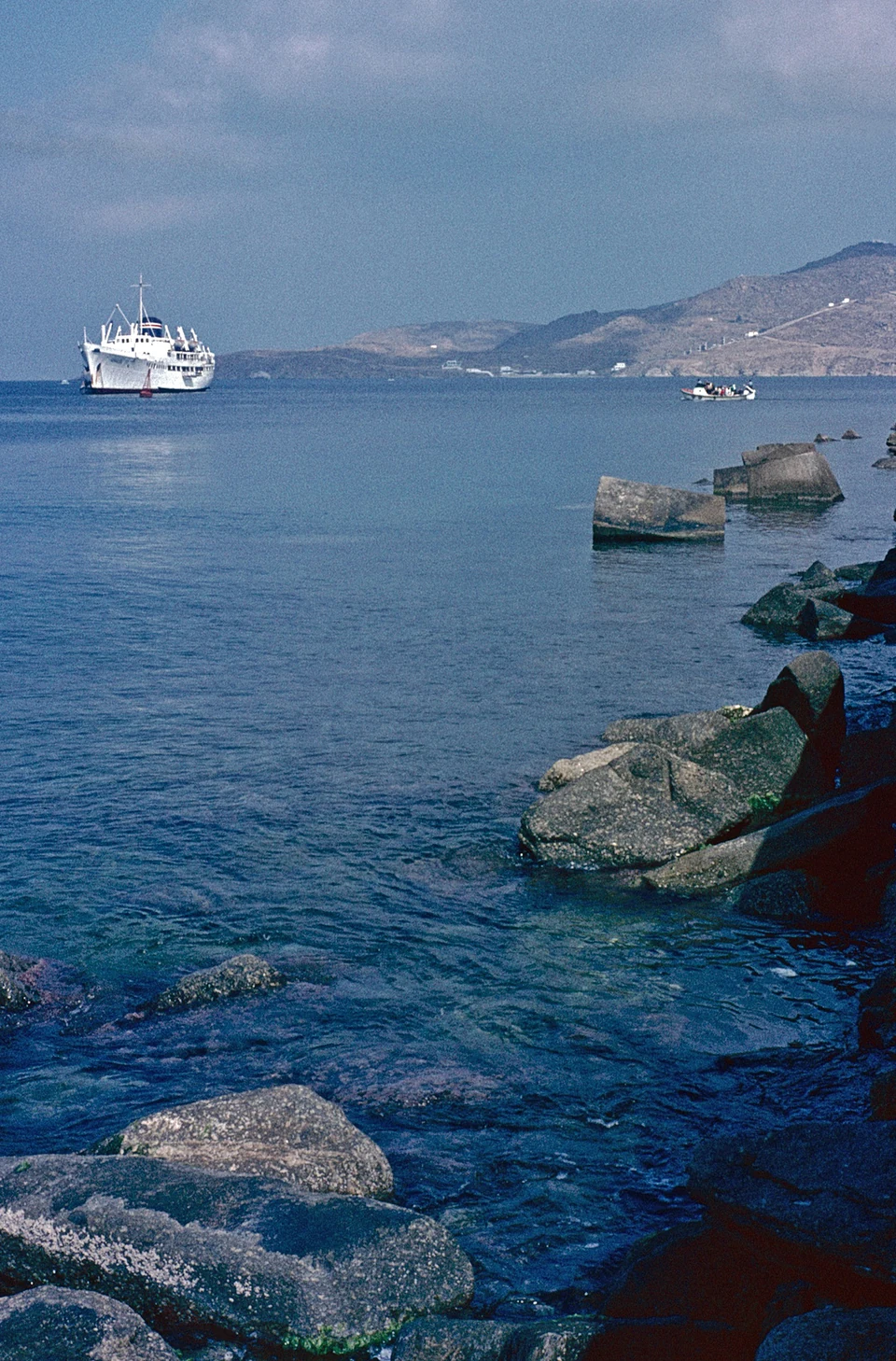
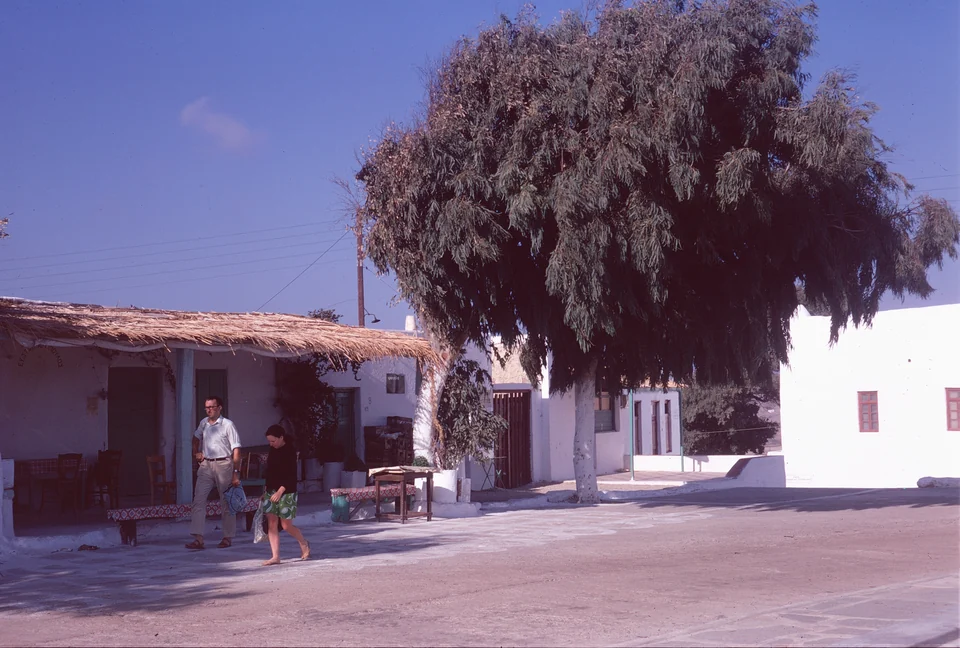
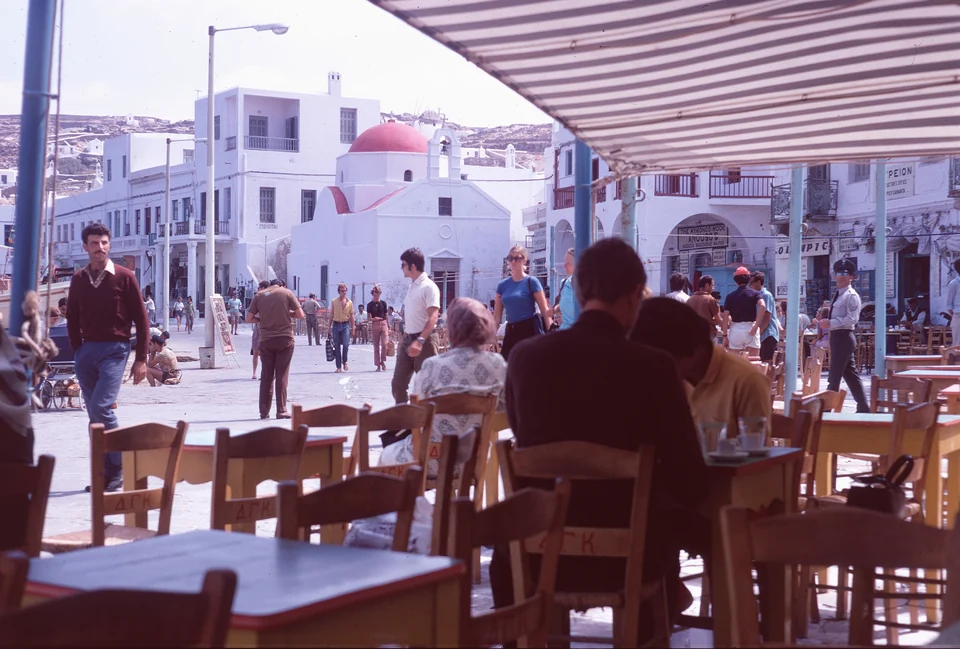
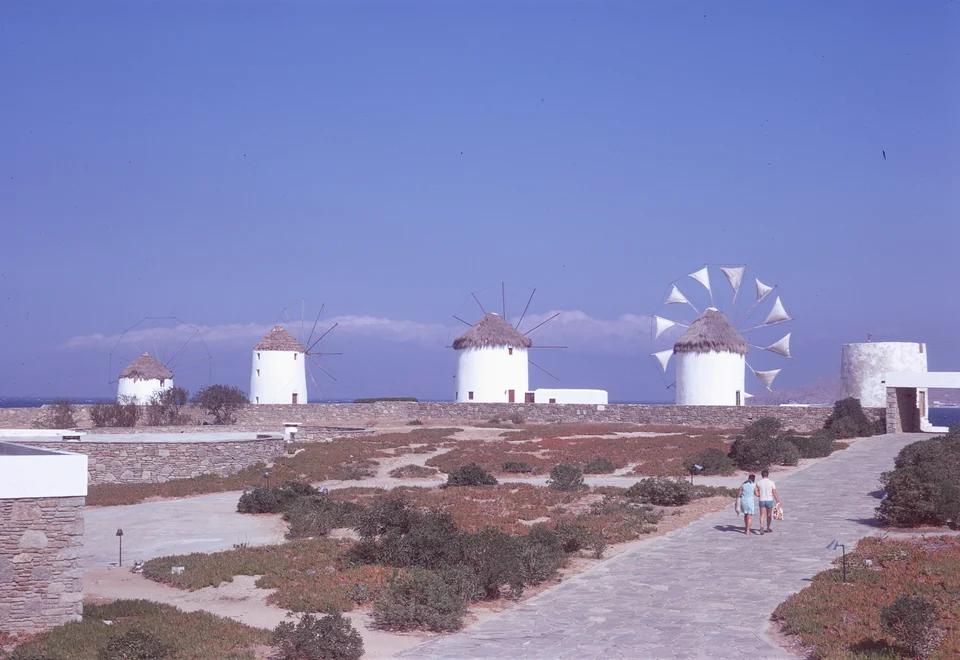
Seven photographs by Guus Gorter, dated 16 September 1970, and Walter Baur’s view of a ship and small passenger boat in 1972 accompany this reading. Waterfronts, a hotel, a lane, café tables and windmills keep the wider setting in view. These are independently dated photographs of Mykonos, not illustrations of Piro’s journey or evidence about the identities of the people shown.
READING THE ACCOUNT
Possibility is not the same as belonging
A visitor’s account can register the intensity of a moment while leaving the conditions around it largely unexamined. The ability to travel, stay and depart is not the same as making a life in a place. The useful historical question is therefore whose possibility is being described, rather than whether an island was simply free or unfree.
Reading critically also means refusing to turn a narrator’s categories into identities assigned by us. Attraction, proximity and participation in a remembered scene are not a licence to classify another person. The article can illuminate a gay traveller’s way of looking without identifying every person in that view as gay.
Residents, seasonal workers, women and queer people with different lives would require sources in which their own experiences can be heard. Their absence from this small body of evidence cannot tell us that they were absent from the island. It tells us where the present reading must stop, and where oral histories, local records and other contemporary writing could begin.
GAY PRESS · 1974
A destination offered for sale
A later document moves from recollection to a commercial offer. On page 7 of Gay News, issue 54, dated 12–25 September 1974, All About Travel advertised Stay-Gay Holidays to Mykonos, for one or two weeks, from £79. The original advertisement places the island within travel marketing addressed to that newspaper’s readership.
An advertised holiday is evidence of an offer, not of a completed journey. It supplies neither booking numbers nor a portrait of the people who travelled. And it cannot show that the earlier Vector article caused anyone to book. These are distinct appearances of Mykonos in gay print culture, separated by publisher, purpose and date.
Read in sequence, the documents show why a single origin story would be too neat. Official promotion, personal expectation, domestic labour and a holiday offer describe different relationships to the same island. Their overlap is historically useful precisely because none can stand in for the others.
The strongest conclusion is modest but substantial: by March 1973, readers of Vector could encounter a personal account that placed Mykonos within a gay traveller’s geography of possibility. It is a surviving view, not the island’s collective autobiography. A fuller history begins by preserving that difference—and by looking for the people whose accounts are still missing.
Selected historical sources
- Richard Piro — A Gay American in Greece: What to Expect, Vector 9/3, March 1973, pp. 6, 8
Society for Individual Rights / UC Berkeley Library · Historical publication · Checked 19 Sept 2026
- The Aegean Islands — GNTO No. 30, October 1967, Mykonos entry
Greek National Tourist Organisation / Imagining Greece · Institution · Checked 19 Sept 2026
- Margaret A. Stott — Economic transition and the family in Mykonos, 17 (1973), pp. 122–133
The Greek Review of Social Research / EKT · Research · Checked 19 Sept 2026
- Stay-Gay Holidays / All About Travel — advertisement, Gay News 54, 12–25 September 1974, p. 7
Gay News / Gay News Archive · Historical publication · Checked 19 Sept 2026